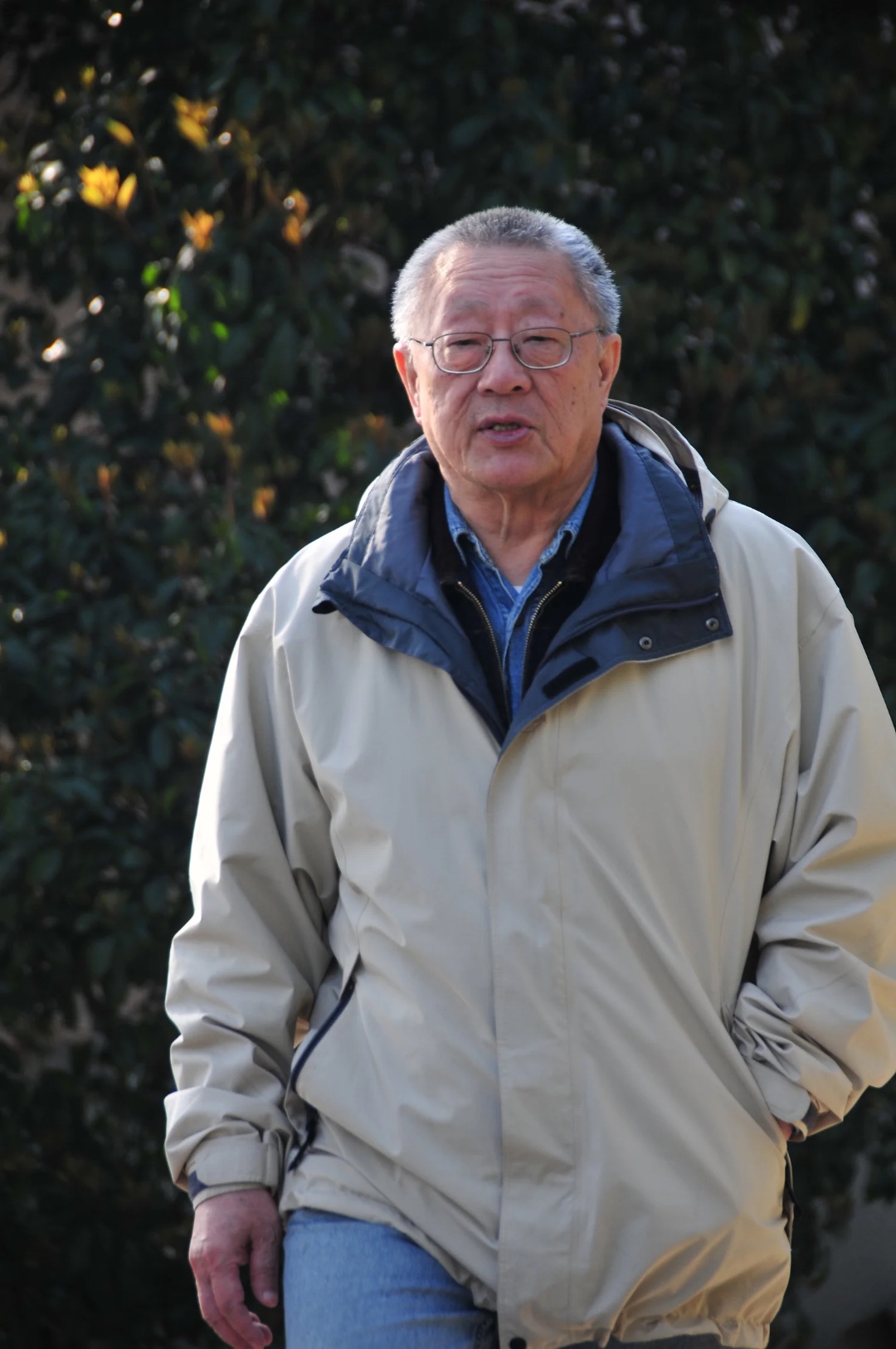
From Visionary Inventor to Cultural Pioneer:

The Legacy of Chu Bong-Foo

從發明者到文化開拓者:

朱邦復的時代傳承

The Awakening (1974)

A life unscripted. A mission unshaken.

He never studied computer science. 


Chu Bong-Foo majored in agricultural sciences in Taiwan — a practical path, far from the world of code or digital systems. But practicality couldn’t contain his restless, creative spirit.

After military service, he set off on an unconventional journey: he moved to Brazil to study music composition, wandered the United States in search of ideas, then returned to Brazil, embracing a life that defied convention — part artist, part idealist, always searching.

And then, the moment came.

While working at a publishing house in São Paulo, he noticed a staggering contrast: an English-language book could be printed in 12 hours. A Chinese book of similar length? Over six months.

That wasn’t just a technical gap — it was a cultural wound.
The Chinese language, with thousands of characters and no standard indexing system, had no place in the modern publishing world.

That moment became his awakening.
With no formal training in computing, Chu resolved to change how Chinese characters lived — and survived — in the digital age.

1974年 - 朱邦復對中文數字化的覺醒

不按常規的人生,不曾動搖的使命。

他從來沒有學過電腦科學。

朱邦復先生在台灣主修農業,這是一條務實的道路,與科技或數碼系統毫無關聯。但務實的選擇無法約束他內心那份不安於現狀、追求創造的精神。

完成兵役後,他踏上了一段極不尋常的旅程:先到巴西學習作曲,後來前往美國探索思想與靈感,再返回巴西,過著一種反傳統的生活 —— 既是藝術家,也是理想主義者,總是在尋找人生的答案。

然後,那個轉捩點出現了。

在聖保羅一間出版社工作期間,朱邦復注意到一個令人震驚的落差:一本英文書可以在12小時內完成印刷,而一本中文書卻需超過六個月。

這並不只是技術的差距,而是一道文化的痛點。中文擁有數以萬計的漢字,卻缺乏標準的檢索與排序系統,在現代出版與資訊世界中,幾乎無立足之地。

這個時刻成為了他的覺醒。雖然沒有任何正式的電腦科學訓練,朱邦復立志改變中文在數碼時代的生存方式 ——不讓語言消失於科技洪流之中,而是賦予它新的生命與架構。

The Invention of Cangjie and Its Impact (1976–1981)

When vision meets determination.

In 1976, after two years of self-driven research, Chu Bong-Foo unveiled the CangJie Input Method (倉頡輸入法) — a revolutionary system that broke away from phonetics and instead encoded Chinese characters based on their visual roots. It was a radical idea: treat characters like building blocks of logic, structure, and shape.

He mapped out a way to dissect each character into what he called “Chinese alphabets”, creating a sequence-based, logic-driven input system that gave users precise control and speed. Suddenly, the Chinese language had its own architecture — a system to be indexed, retrieved, typed.

In 1980, this work culminated in the launch of the Tianlong Chinese Computer (天龍中文電腦), developed in partnership with Acer. It was the first of its kind: a machine that could input, display, and print Chinese characters with native integration. A technical marvel — but more importantly, a cultural leap forward.

Then, in 1981, he did something few inventors would ever do.
Chu gave it all away. He publicly released the intellectual property of CangJie, refusing to patent or commercialise it. He believed that a language belonged to its people — and that open access would serve culture better than control ever could.

This act of generosity laid the foundation for the open ecosystem of Chinese computing that followed.

倉頡輸入法的誕生與影響(1976–1981)

從構想到實踐,志行合一,開創中文輸入的全新時代。

1976年,經過兩年自學研究,朱邦復先生正式發表了 倉頡輸入法。這套劃時代的系統打破了拼音輸入的限制,改以字形為基礎進行編碼 —— 視每一個漢字為具備邏輯、結構與形狀的組合體,是一次語言科技上的根本創新。

他提出將漢字拆解為「中文字母」的概念,建構出一個以邏輯為基礎、具備檢索順序的輸入系統,讓使用者得以快速、準確地輸入文字。從此,中文語言擁有了屬於自己的「架構」——可以被檢索、編碼、書寫的系統化方式。

在1980年,他的努力結晶為「天龍中文電腦」的誕生,這是與宏碁合作開發的首部中文電腦。
它是第一台能原生輸入、顯示與輸出中文的電腦系統,
既是技術上的突破,更是文化上的躍進。

1981年,朱邦復做了一件極少發明者會做的事:
他將整個倉頡輸入法的知識產權無償公開,拒絕申請專利,也不作商業化。他相信,語言屬於全民,開放的共享比封閉的控制更能服務文化的延續與發展。

這項無私的舉動,為日後中文電腦技術的開放生態奠定了基礎。

Beyond Input — Cultural Systems Thinking (1980s–2000s)

Language is more than words — it’s a logic of culture.

Chu’s contributions didn’t stop at input.
In the decades that followed, he turned his focus toward the deeper logic of Chinese characters — not just how we type them, but how we understand them, how we structure them, how they encode culture across centuries.

He introduced the idea of Chinese character “genes” (漢字基因 ) — a conceptual framework for understanding how radicals and components form deeper cognitive and cultural patterns.

He developed the Chinese Font Generator, which allowed for scalable, modular typeface generation. He contributed to Unicode standardization efforts, pushing for the inclusion and proper encoding of complex Chinese forms.

His vision was never about technology for its own sake. It was about ensuring that the Chinese language — in all its depth, nuance, and logic — could thrive in a world increasingly built on digital frameworks not made for it.

Through it all, he remained anchored by one principle: public knowledge must remain public.

超越文字輸入:文化系統思維(1980年代至2000年代)

語言不僅是文字,更是文化的邏輯。

朱邦復的貢獻,從來不限於輸入法。
在隨後幾十年中,他的視野擴展至漢字的深層邏輯:我們如何理解文字、如何建構語言、以及漢字如何穿越歷史,持續承載我們的文化記憶。

他更提出了「漢字基因」的概念,從構字部件與語意結構出發,建構出一套文化與認知的解析框架,幫助我們理解漢字如何承載千百年來的思想與語言邏輯。

他開發了中文字型產生器,實現中文字型的模組化與可擴展設計,並積極參與 Unicode 編碼標準的制定,推動複雜漢字的正確編碼與全球通用。

朱邦復先生從不以技術為終點,他的願景,是讓中文語言——包括其深度、細膩與邏輯—— 在一個原本為拼音文字而設計的數碼世界中,仍能蓬勃發展,延續生命力。

貫穿他一生工作的,是一個堅定的信念:知識應屬於公眾,應向社會開放

Legacy in Motion — and the Birth of CBFHK

Preserving a Legacy. Inspiring the Future.

In recent years, Chu Bong Foo has gradually stepped back from public life, now residing in Macau, turning towards cultural preservation — building extensive databases of Chinese characters, mentoring a new generation of language technologists, and speaking passionately about the intersection of tradition, logic, and open knowledge. Though retired from the spotlight, he remains a quiet force — mentoring students, advising thinkers, and continuing to shape how Chinese language and culture evolve in the digital age.

His work earned him the Outstanding Technology Contribution Award from Taiwan’s Executive Yuan, but his deeper legacy lived in the quiet systems we all used — the way millions typed, searched, and expressed themselves in Chinese every day.

His vision — one grounded in openness, cultural systems thinking, and the power of knowledge as a public good — continues to ripple through communities of educators, technologists, and creators.

In 2014, a group of his long-time collaborators and cultural advocates came together to formally establish the Chu Bong Foo Culture Foundation Hong Kong (CBFHK) — not as a monument, but as a living platform.

A platform to carry his ideas forward.
To support youth-centered cultural initiatives.
To preserve and reinterpret Chinese heritage for the next generation — through education, storytelling, technology, and the arts.

CBFHK is not about honoring the past for its own sake. It is about equipping the future — with tools, values, and imagination drawn from one of the richest linguistic traditions in the world. At the heart of CBFHK’s work is the belief that technology can be a powerful bridge between heritage and innovation — enabling new forms of learning, creation, and expression for all.

While CBFHK shares philosophical roots and historical alignment with the Chu Bong Foo Culture Foundation (朱邦復文化基金會), a registered charity and corporate foundation (財團法人) in Macau, the Chu Bong Foo Culture Foundation Hong Kong Limited (朱邦復文化基金有限公司) operates as an independent, Hong Kong-registered charitable organization, with its own governance, local partnerships, and mission-driven initiatives focused on serving Hong Kong communities.

承傳啟行:CBFHK 的誕生

承傳精神,啟迪未來

近年來,朱邦復先生漸漸淡出公眾視野,現居澳門,專注於文化保存工作。他建立龐大的漢字資料庫,指導新一代語言技術人才,並積極倡導傳統、邏輯與開放知識的交匯應用。儘管已退出前線,他仍是一股潛在的力量——默默地培育學生、啟發思想者,持續影響著中文語言與文化在數碼時代的演進。

他曾獲台灣行政院頒發「傑出科技貢獻獎」,但他更深層的貢獻,其實早已融入我們日常使用的系統與習慣中——成千上萬的人,透過他所啟發的技術輸入、搜尋與表達中文。

他一貫堅持的價值觀——包括開放共用、文化系統思維,以及知識作為公共資源的力量——至今仍在教育、科技與創作社群中持續發酵,產生深遠影響。

2014年,一群長年與朱邦復先生並肩同行的合作夥伴及文化倡議者,正式成立朱邦復文化基金有限公司(CBFHK),延續朱邦復的理念與使命。

一個承載其理念的平台。
推動以青年為本的文化項目,
透過教育、敘事、科技與藝術,保存並重新詮釋中華文化,為下一代延續其價值。

CBFHK 的成立,不只是為了向過去致敬,而是為了裝備未來 —— 透過工具、價值與想像力,從全球最豐富的語言傳統之一汲取靈感,啟發新一代。CBFHK 的核心信念是:科技不應與傳統對立,而應成為連結文化與創新的橋樑 —— 為所有人創造嶄新的學習、創作與表達方式。

雖然 CBFHK 與澳門的朱邦復文化基金會(Chu Bong Foo Culture Foundation ),一所澳門註冊慈善機構及財團法人,在理念與歷史淵源上有緊密關聯,朱邦復文化基金有限公司(CBFHK)乃一間獨立於香港註冊成立的慈善有限公司,擁有獨立的管治架構、本地夥伴網絡,並專注於服務香港社群的使命導向項目。